
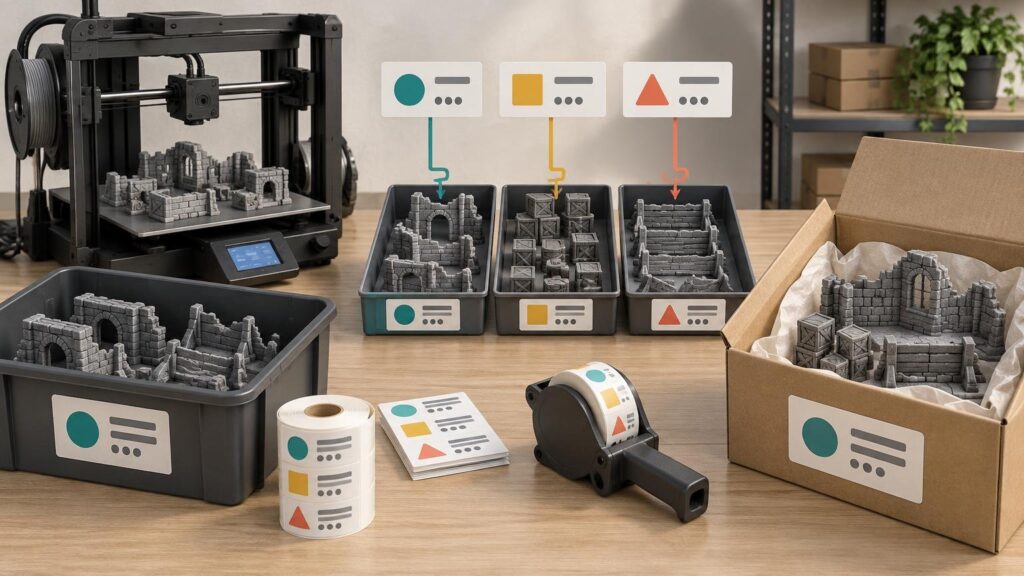
Labels for a Terrain Print Farm: Batch IDs, Orders and Packing
A practical three-part label system for tracking terrain batches, keeping orders separate and packing finished sets without losing production details.

A practical three-part label system for tracking terrain batches, keeping orders separate and packing finished sets without losing production details.
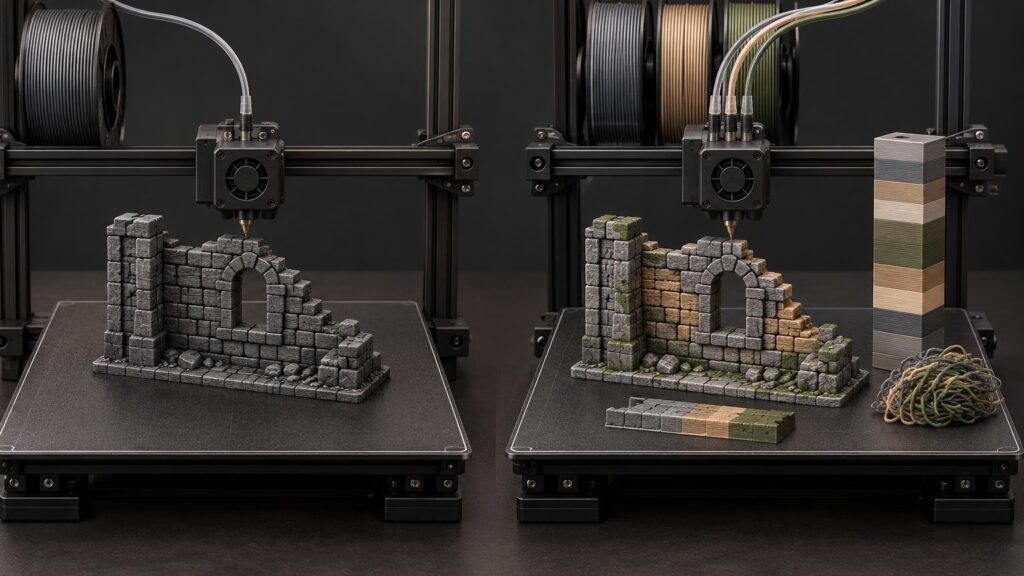
A controlled single-color-versus-multicolor comparison reveals how much printer time and material are consumed by filament changes, purging, and wipe structures.
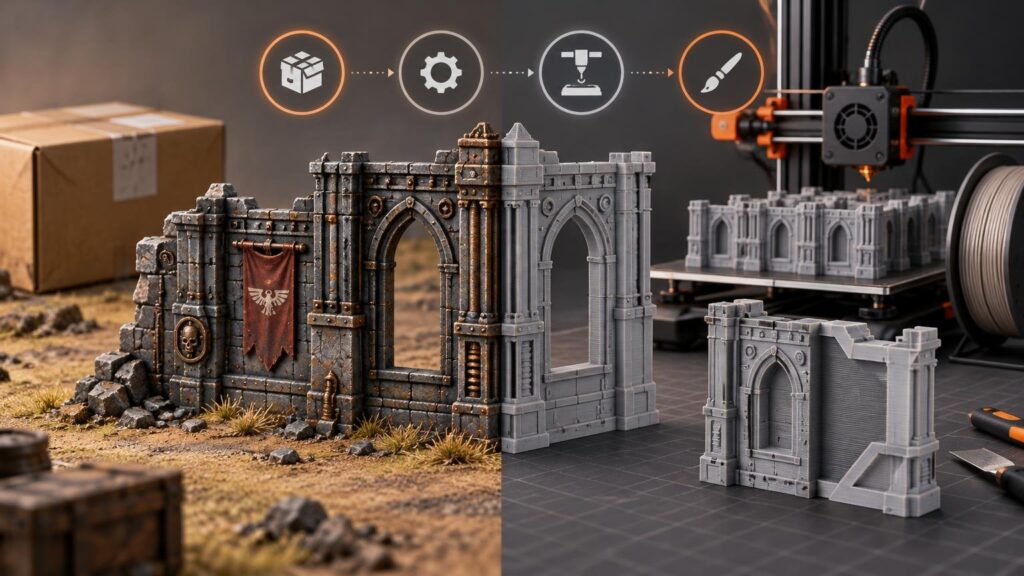
Finished terrain usually reaches the table faster for a one-off project. Printing your own becomes more competitive when the printer is already tuned and the same modular parts will be produced repeatedly.
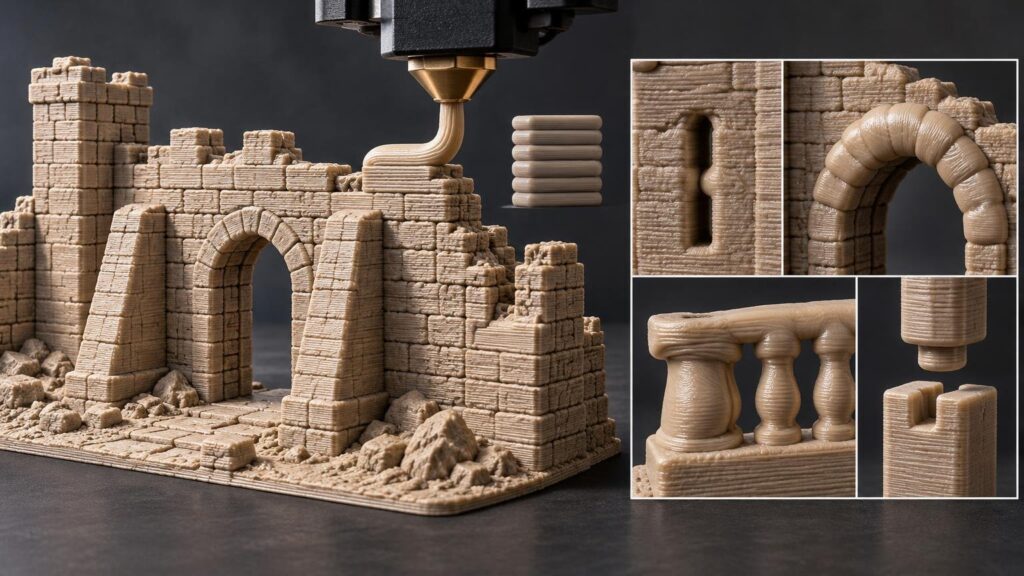
A 0.8 mm nozzle is excellent for broad, sturdy terrain, but it becomes too large when narrow details, gaps, curves or fitted interfaces stop printing reliably. Here is how to make the decision in the slicer before committing to a full build plate.
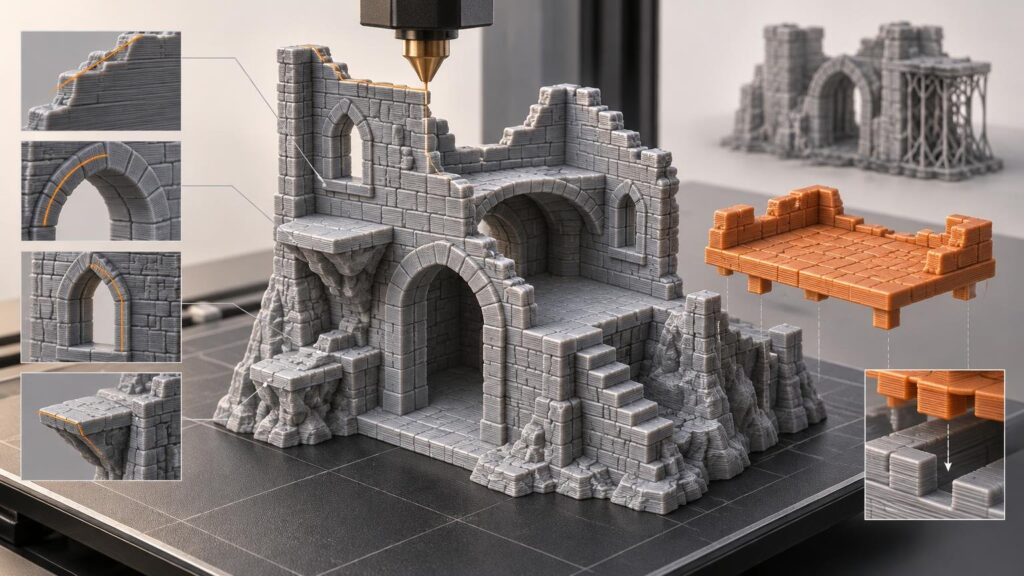
Design reliable support-free FDM terrain with self-supporting slopes, arches, short calibrated bridges, favorable orientation, and efficient multipart construction.
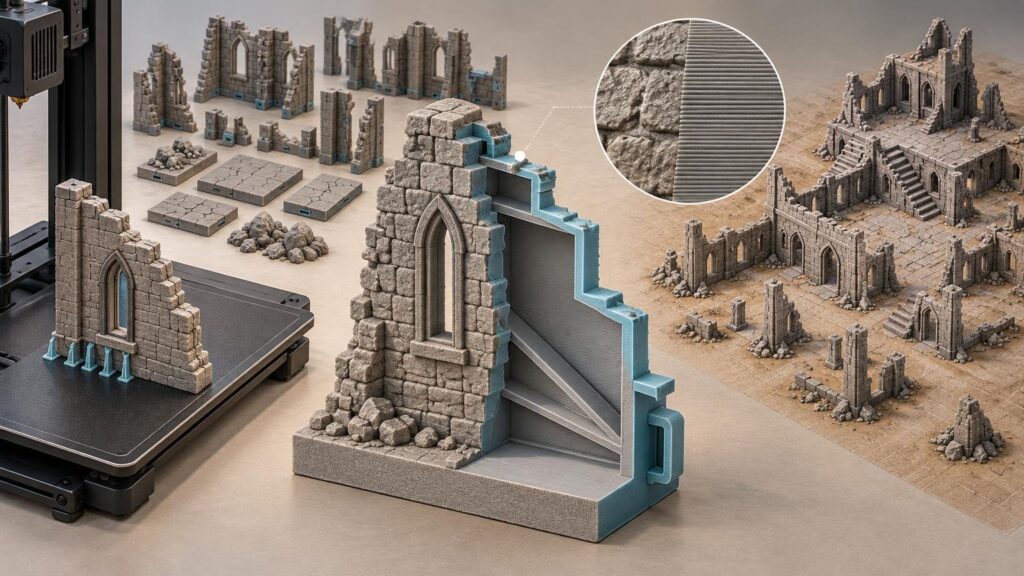
Fast terrain production depends on the whole workflow, not machine time alone. Design for reliable orientation, limited cleanup, controlled interfaces, durable walls, repeatable batches, and useful tabletop coverage.
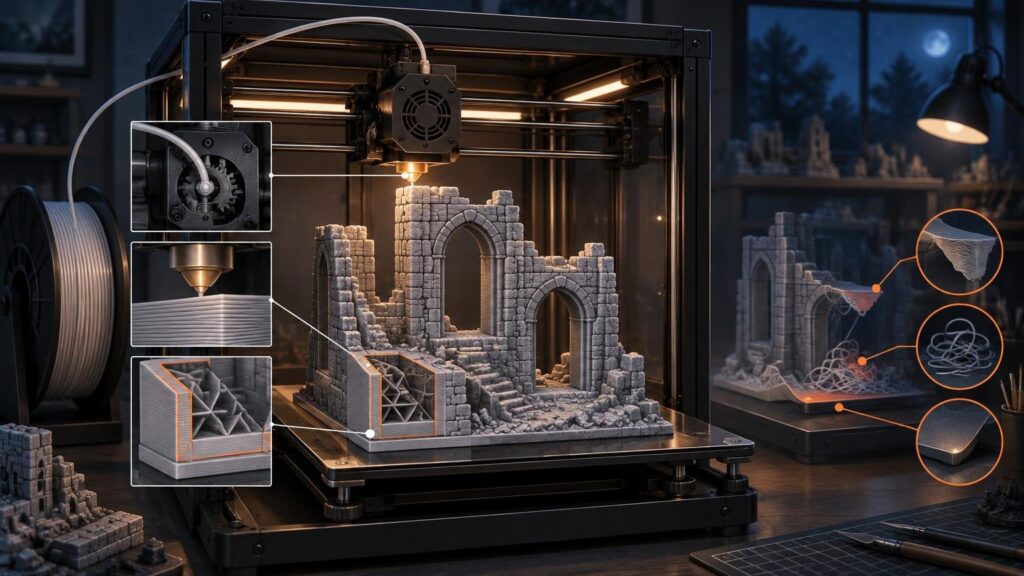
Long terrain prints can amplify adhesion, extrusion, motion, filament-path, or geometry problems. Diagnose the evidence, validate the setup, and follow the printer manufacturer’s operating guidance.
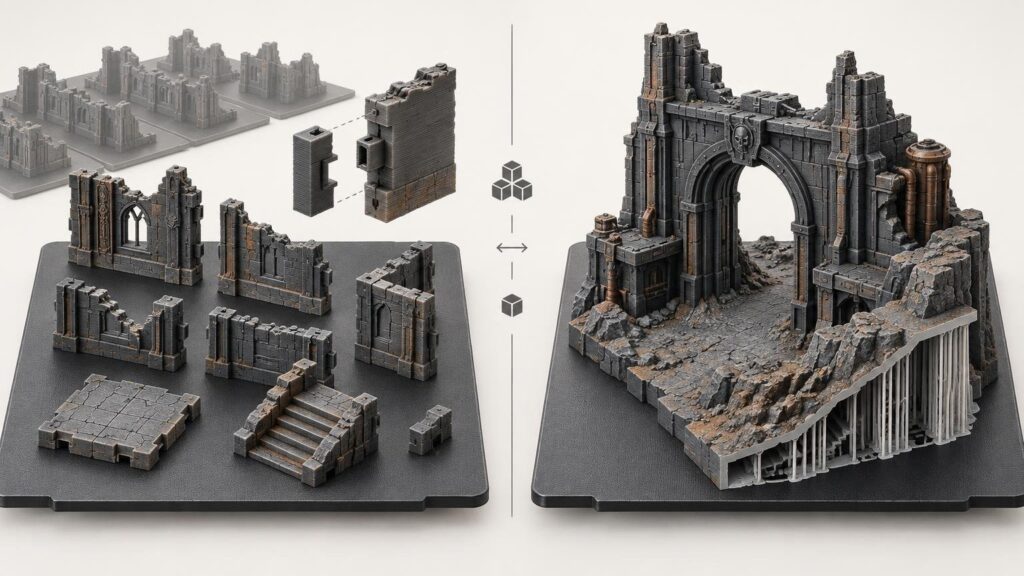
Modular terrain usually delivers better collection-level efficiency through reuse, batching, and replaceability. A one-piece print can still win for a support-light centerpiece that fits the bed and needs no assembly.
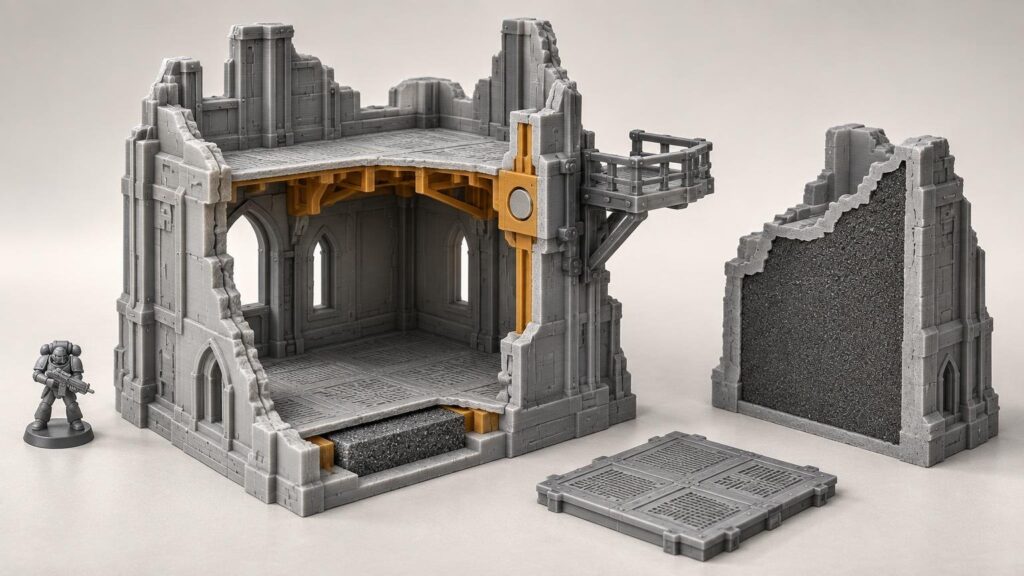
Most tabletop terrain does not need a completely solid interior. Learn when a strong shell is enough, where local reinforcement matters, and how to compare options fairly in your slicer.